
O Boticário
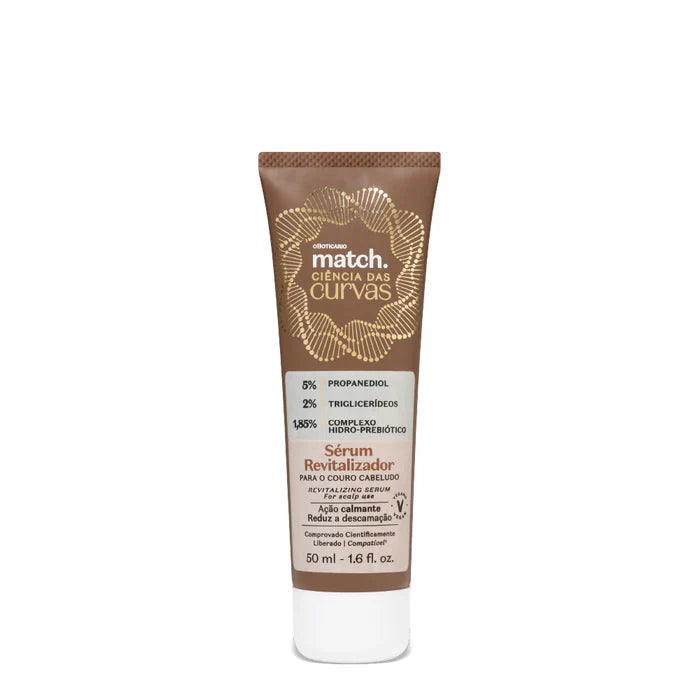
Match Curl Science Scalp Revitalizing Serum, 50ml

Pay 30 days later

Pay 30 days later
Authentic Brazilian Products.
Bilingual Support: English & Portuguese
DESCRIPTION
Every curl is unique. Match Curve Science is for them all!
Match Curve Science Revitalising Serum will leave your hair 100% nourished from root to tip¹ with a fresh, comfortable fragrance. Co-created and approved by women with curly, frizzy and braided hair, it has been exclusively developed to meet the needs of your curvature type (3ABC to 4ABC). Its 100% vegan, long-lasting formula provides:
- Soothing action
- Rapid absorption with a non-greasy texture
- Relief from dry scalp discomfort such as itching and flaking
A formula with 5% Propanediol, an agent that contributes to moisturisation, 2% Triglycerides, which act as powerful emollients + 1.85% Hydro-Prebiotic Complex, which balances the biota of the scalp, contributing to more nourished hair.
Your story, our science: a revolutionary combination!
About Match Curve Science
Match Curve Science is the vegan line of products for all curves that perpetuates the evolution of Boticário. We studied the DNA of your hair type² in depth, through science. The result? A line 100% ready to give you the care you need and immediate results. Made exclusively to match your hair type, it's for every curve, it's unique!
How to use: Apply daily to damp or dry hair. Then massage in with your fingers and comb through as normal. Do not rinse.
1- Results obtained through the combined use of the line
2- Study carried out using bioinformatic analyses
Loved by thousands
Choose options
Pay 30 days later
Pay 30 days later
Authentic Brazilian Products.
Bilingual Support: English & Portuguese
DESCRIPTION
Loved by thousands
Pay 30 days later
Pay 30 days later
Authentic Brazilian Products.
Bilingual Support: English & Portuguese
DESCRIPTION
Loved by thousands
FAQ
Yes, we ship all over the world. Shipping costs will apply, and will be added at checkout. We run discounts and promotions all year, so stay tuned for exclusive deals.
It depends on where you are. Orders processed here will take 5-7 business days to arrive. Overseas deliveries can take anywhere from 7-16 days. Delivery details will be provided in your confirmation email.
You can contact us through our contact page! We will be happy to assist you.